



TL;DR — What You'll Learn
Compare Headless CMS vs Traditional CMS, including SEO, performance, scalability, security, costs, and business use cases. Discover the right CMS for your digital platform.
Content management systems (CMS) are the backbone of modern digital experiences. Whether you're running a corporate website, an eCommerce platform, a SaaS application, or a mobile app, the CMS you choose directly impacts performance, scalability, security, and user experience.
As businesses move toward omnichannel content delivery and modern web technologies like Next.js, React, and mobile applications, the debate around Headless CMS vs Traditional CMS has become increasingly important.
Should you stick with a traditional CMS like WordPress or Drupal? Or should you embrace a modern Headless CMS architecture for greater flexibility and future scalability?
This comprehensive guide explores the key differences, advantages, disadvantages, SEO implications, and business use cases to help you make the right decision.
What Is a Content Management System (CMS)?
A Content Management System (CMS) is software that enables businesses to create, manage, edit, and publish digital content without requiring advanced technical expertise.
A CMS helps organizations:
- Create and publish website content
- Manage blogs and articles
- Organize digital assets
- Support marketing campaigns
- Deliver content across digital channels
Modern CMS platforms have evolved far beyond websites and now support mobile applications, smart devices, digital kiosks, and enterprise systems.
What Is a Traditional CMS?
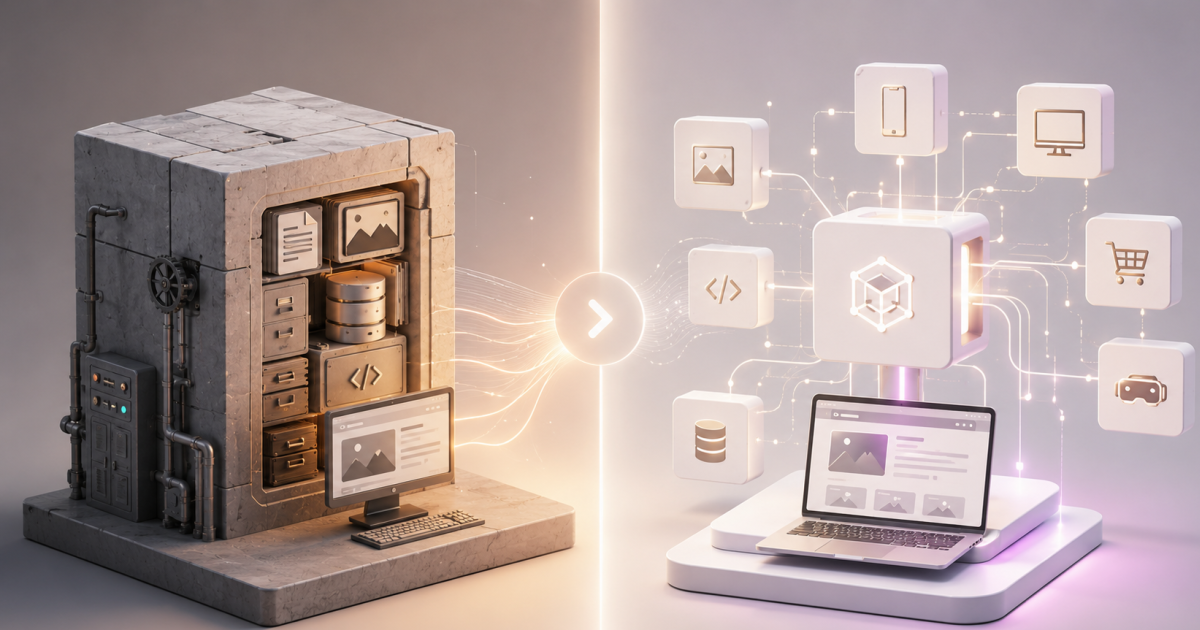
A Traditional CMS combines content management and content presentation within a single platform. The backend manages content, while the frontend controls how that content is displayed using themes, templates, and plugins.
Popular traditional CMS platforms include:
- WordPress
- Drupal
- Joomla
- TYPO3
Traditional CMS solutions are ideal for businesses that need a website quickly with minimal development effort.
What Is a Headless CMS?
A Headless CMS separates the content management backend from the presentation layer. Content is stored centrally and delivered via APIs to websites, mobile apps, smart TVs, kiosks, or any digital platform.
Popular Headless CMS platforms include:
- Contentful
- Strapi
- Sanity
- Storyblok
- Hygraph
- Directus
Headless CMS enables organizations to create content once and distribute it across multiple channels seamlessly.
How Traditional CMS Works
In a traditional CMS architecture, content and presentation are tightly connected.
Workflow:
Content Creation → CMS Backend → Website Template → Published Website
This setup simplifies content management but can limit flexibility when supporting multiple platforms.
How Headless CMS Works
In a Headless CMS architecture, content is delivered through APIs.
Workflow:
Content Creation → CMS Backend → API Layer → Website / Mobile App / Smart Device
This architecture enables businesses to serve content consistently across multiple customer touchpoints.
Headless CMS vs Traditional CMS: Key Differences
| Feature | Traditional CMS | Headless CMS |
|---|---|---|
| Frontend Control | Limited | Complete Flexibility |
| API-First Architecture | No | Yes |
| Omnichannel Support | Limited | Excellent |
| Scalability | Moderate | High |
| Performance | Good | Excellent |
| Mobile App Integration | Limited | Excellent |
| Developer Flexibility | Moderate | Very High |
Benefits of Traditional CMS
Quick Website Deployment
Traditional CMS platforms offer pre-built themes and templates, reducing development time.
User-Friendly Content Management
Marketing teams and content editors can manage content without technical expertise.
Large Plugin Ecosystem
Platforms like WordPress provide thousands of plugins for SEO, analytics, forms, and security.
Lower Initial Costs
Businesses can launch websites quickly without extensive custom development.
Benefits of Headless CMS
Omnichannel Content Delivery
Deliver content across websites, mobile apps, kiosks, wearables, and smart devices from one centralized platform.
Future-Proof Architecture
Headless CMS supports evolving technologies and digital experiences without major platform changes.
Superior Performance
Modern frameworks like Next.js and React work exceptionally well with Headless CMS solutions.
Enhanced Developer Flexibility
Developers can use any frontend framework without CMS limitations.
Improved Scalability
Businesses can scale frontend applications independently from backend content systems.
SEO Comparison: Headless CMS vs Traditional CMS
SEO is often a deciding factor when choosing a CMS.
Traditional CMS SEO Benefits
- Built-in SEO plugins
- Easy metadata management
- Simple content publishing workflows
Headless CMS SEO Benefits
- Faster page load speeds
- Improved Core Web Vitals
- Advanced structured data implementation
- Better scalability for enterprise SEO
- Improved user experience signals
For businesses using Next.js and React, Headless CMS often delivers stronger long-term SEO performance.
Performance & Scalability Comparison
Performance directly impacts user experience, conversions, and search rankings.
Headless CMS architectures typically offer:
- CDN-based content delivery
- Static site generation
- Edge rendering support
- Reduced server load
- Global content distribution
This results in faster websites and improved scalability.
Security Considerations
Traditional CMS Security Challenges
- Plugin vulnerabilities
- Theme exploits
- Frequent updates required
- Larger attack surface
Headless CMS Security Benefits
- Reduced attack surface
- API-controlled access
- Decoupled architecture
- Better infrastructure security
Headless CMS solutions often provide stronger enterprise-grade security capabilities.
Development & Maintenance Costs
Traditional CMS platforms generally have lower upfront costs but can become expensive when heavily customized.
Headless CMS solutions typically require higher initial investment but provide greater flexibility, scalability, and long-term cost efficiency for complex digital ecosystems.
Best Use Cases
Traditional CMS
- Corporate websites
- Small business websites
- Blogs and content portals
- Local business websites
Headless CMS
- Enterprise websites
- eCommerce platforms
- SaaS applications
- Mobile applications
- Omnichannel experiences
- Multi-language websites
Popular CMS Platforms
Top Headless CMS Platforms
- Contentful
- Strapi
- Sanity
- Storyblok
- Hygraph
- Directus
Top Traditional CMS Platforms
- WordPress
- Drupal
- Joomla
- TYPO3
- Magento
Which CMS Should Your Business Choose?
Choose Traditional CMS if:
- You need a website quickly
- Your content strategy is website-focused
- You have limited development resources
- You need lower upfront investment
Choose Headless CMS if:
- You need omnichannel content delivery
- You use modern frameworks like Next.js
- You require high scalability
- You operate mobile apps and web platforms together
- You need future-ready architecture
Why Businesses Choose mTouch Labs
At mTouch Labs, we help organizations build scalable, secure, and future-ready digital platforms using both Headless CMS and Traditional CMS architectures.
- Headless CMS Development
- Next.js Development
- React Development
- Enterprise CMS Solutions
- Mobile App Development
- API Development
- Cloud & DevOps Services
- Digital Transformation Solutions
With over 14 years of experience, mTouch Labs helps businesses select and implement the right CMS strategy for long-term growth.
Explore More Services
- Next.js Development Services
- React.js Development Services
- Mobile App Development Services
- Web Development Services
- UI/UX Design Services
- DevOps & Cloud Services
Conclusion
The choice between Headless CMS and Traditional CMS depends on your business objectives, technology stack, scalability requirements, and digital transformation roadmap.
Traditional CMS platforms remain ideal for content-focused websites and smaller projects. However, organizations investing in enterprise applications, omnichannel experiences, and modern web technologies increasingly prefer Headless CMS architectures.
By understanding the strengths and limitations of both approaches, businesses can make informed decisions that support long-term growth, performance, and customer experience.
Frequently Asked Questions
What is the difference between Headless CMS and Traditional CMS?
Is Headless CMS better for SEO than Traditional CMS?
Why are enterprises moving from Traditional CMS to Headless CMS?
Does mTouch Labs provide Headless CMS development services?
Which businesses should choose a Headless CMS?
When should businesses use a Traditional CMS?
How can mTouch Labs help businesses choose the right CMS architecture?
🎯 Key Takeaways
Compare Headless CMS vs Traditional CMS, including SEO, performance, scalability, security, costs, and business use cases. Discover the right CMS for your digital platform.