


 Chat with us!
How mTouch Labs built a real-time fleet management platform for 500+ vehicles — cutting delivery times 31% and fuel costs 22% in 90 days.
Before this platform I had 500 vehicles and no idea where any of them were. Now I can see everything from my phone. The fuel savings alone paid for the project.
Operations Director, Logistics Client
mTouch Labs built a real-time fleet management and last-mile delivery tracking platform for a regional logistics operator managing 500+ vehicles across 12 cities. The platform replaced manual dispatch with intelligent route optimisation, cutting delivery times by 31% and fuel costs by 22%.
| Project Detail | Information |
|---|---|
| Project Type | Web & Mobile |
| Industry | Logistics & Transportation |
| Technologies | React, React Native, Node.js, PostgreSQL + PostGIS, Google OR-Tools, Redis |
| Delivery Partner | mTouch Labs |
| Primary Outcome | The platform rolled out to all 12 cities in 14 weeks |
The client was coordinating a 500-vehicle fleet using WhatsApp groups and spreadsheets. Dispatchers had no live visibility, customers had no tracking, and route planning was done manually each morning — taking 3 hours and frequently producing wrong routes.
800+ calls per day
We spent the first two weeks riding along with dispatchers and drivers to understand the real workflow before designing anything. The key insight: dispatchers trusted their gut over any system, so the UI had to surface data as decision support — not replace their judgement.
A full-stack logistics platform with a real-time web dispatcher console, driver mobile app, customer tracking portal, and a route optimisation engine using Google OR-Tools. All vehicle positions stream over WebSocket with sub-5-second latency.
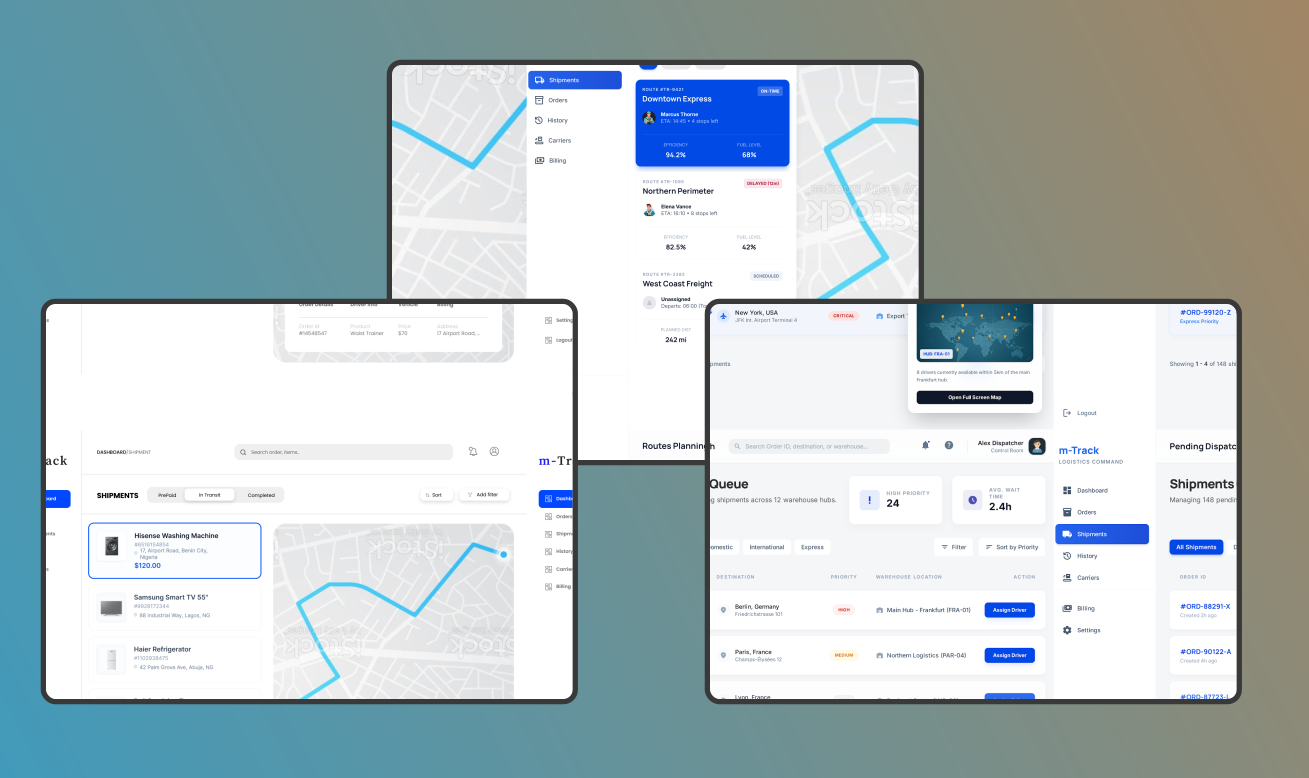
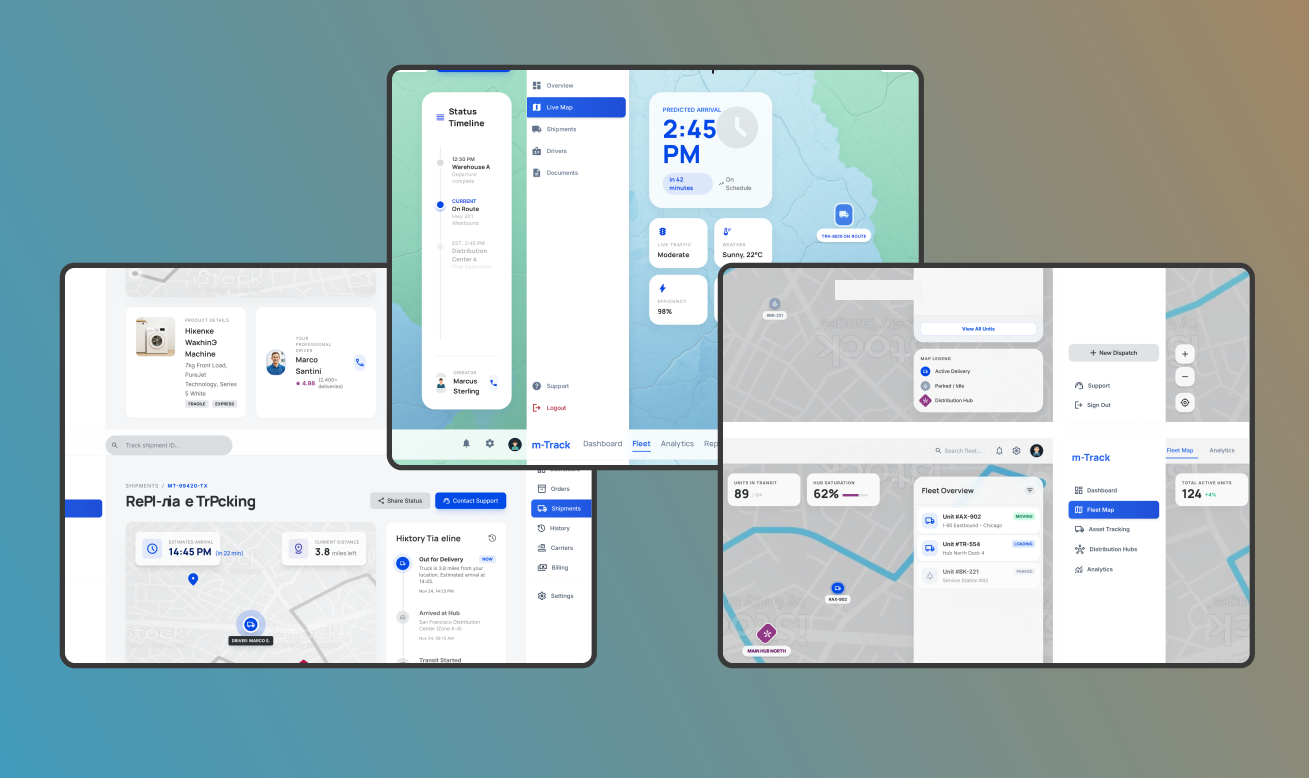
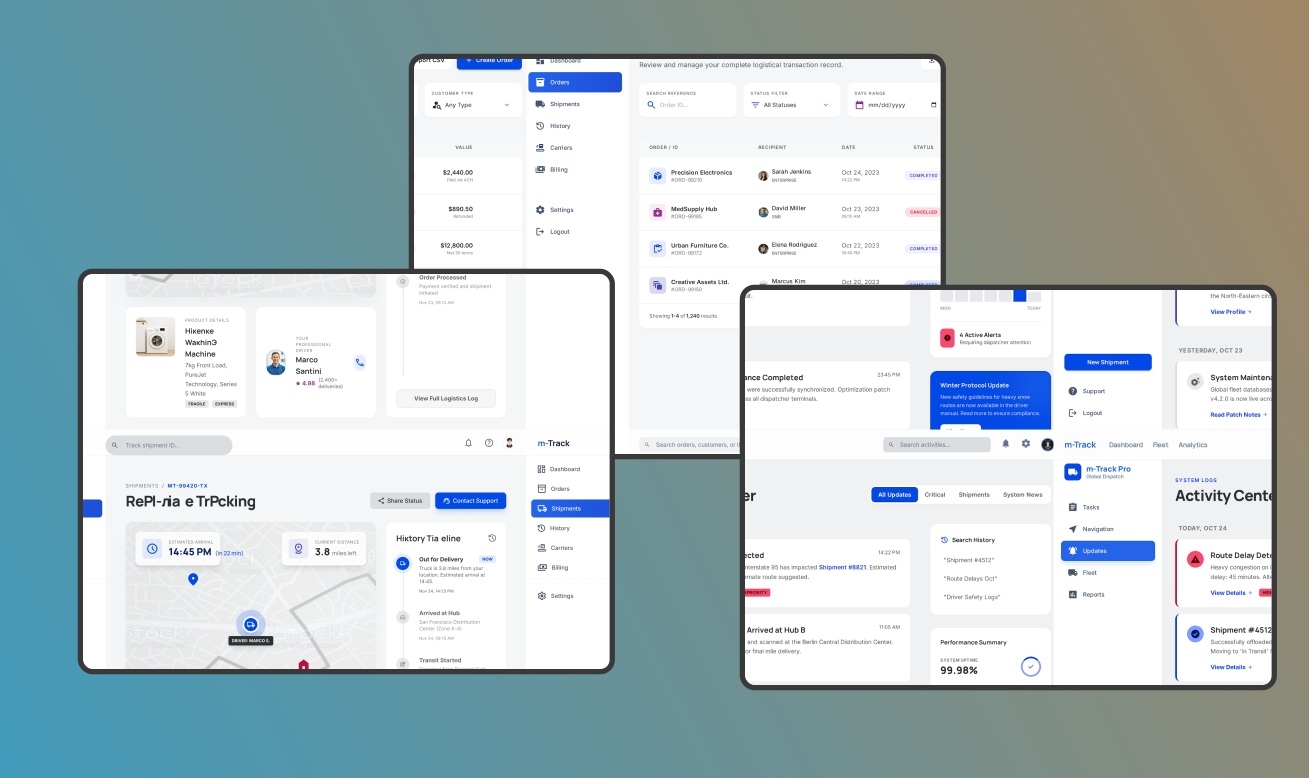
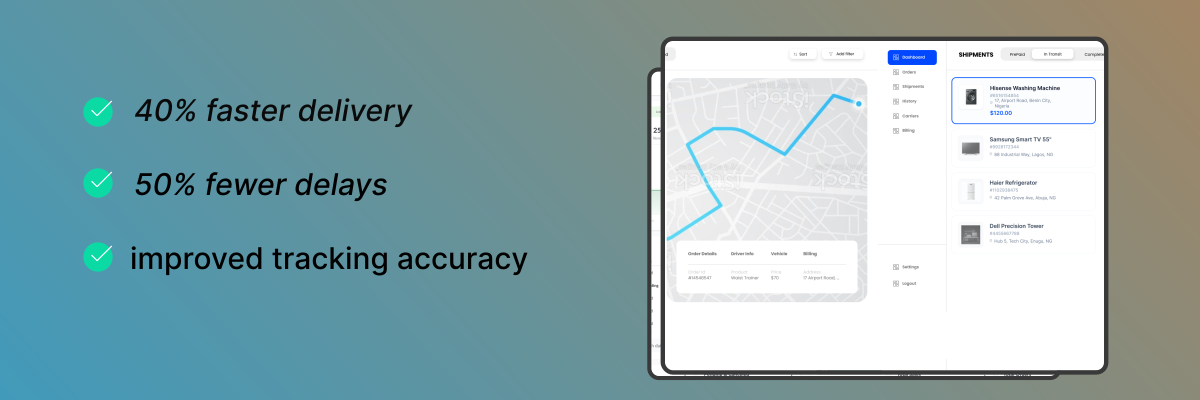
Dispatcher web console with live map and fleet overview
Driver mobile app for Android with offline support
API layer, WebSocket server, and route optimisation orchestration
Geospatial data storage and route history
Vehicle route optimisation with time windows and capacity constraints
Real-time vehicle position cache for WebSocket fan-out
Mapping, geocoding, and turn-by-turn navigation
EC2, RDS, ElastiCache, and SNS for SMS alerts
Observed dispatchers and drivers for 2 weeks to understand real workflows and pain points
Designed the PostGIS schema for geospatial queries and time-series position history
Built the WebSocket pipeline from driver app through Redis fan-out to dispatcher console
Integrated Google OR-Tools with time window and vehicle capacity constraints
Built React Native app with offline-first architecture for low-connectivity areas
Built the self-serve customer portal with live map and push notification ETAs
Phased rollout across 3 cities with on-ground driver training before full fleet deployment
The platform rolled out to all 12 cities in 14 weeks. Within 90 days, operational metrics improved dramatically and customer support volume dropped sharply.
In logistics, every minute and every kilometre has a cost. By giving dispatchers real-time visibility and drivers a reliable tool, we removed the friction that was bleeding operational efficiency. The system paid for itself in fuel savings within 4 months.
We built an autonomous AI support agent that resolves customer tickets end to end — understanding intent, retrieving account context, and taking real actio....
View case studyWe developed a generative AI chatbot that holds natural, context-aware conversations across a SaaS product — answering product questions, guiding onboardin....
View case studyWe delivered an AI workflow automation platform that orchestrates multi-step business processes across departments — routing documents, making decisions, a....
View case studyWhat businesses ask us most often about this project and how we built it.
Yes. The React Native driver app is offline-first — it caches the day's route and syncs position data when connectivity is restored, ensuring no data loss in low-signal areas.
Vehicle positions are pushed to the dispatcher console every 4 seconds via WebSocket when the driver app is active.
Yes. We expose a REST API for all core entities including orders, routes, vehicles, and drivers, and can integrate with any TMS or ERP that has an API.
mTouch Labs combines AI-powered development with deep industry expertise to deliver solutions faster.